With its concerns continuing to resonate today, Tom Wright’s adaptation of Joan Lindsay’s novel, Picnic at Hanging Rock is an excellent choice of an Australian classic to bring to the stage. The novel, written in 1967 and set in 1900, addresses the relationship between the white settler culture and the new land they have colonised. The potential danger of nature, and its ancient, mystical power sits at odds with the new settlers’ desire to replicate their English way of life, subjugating the land to their will.
The play begins with the performers lined up across the stage narrating the first part of the story – a group of girls and teachers from Mrs Appleyard’s College for Girls in Mt Macedon, Victoria go on a picnic to Hanging Rock on St Valentine’s Day 1900. Some of them disappear, without a trace.
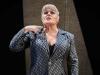
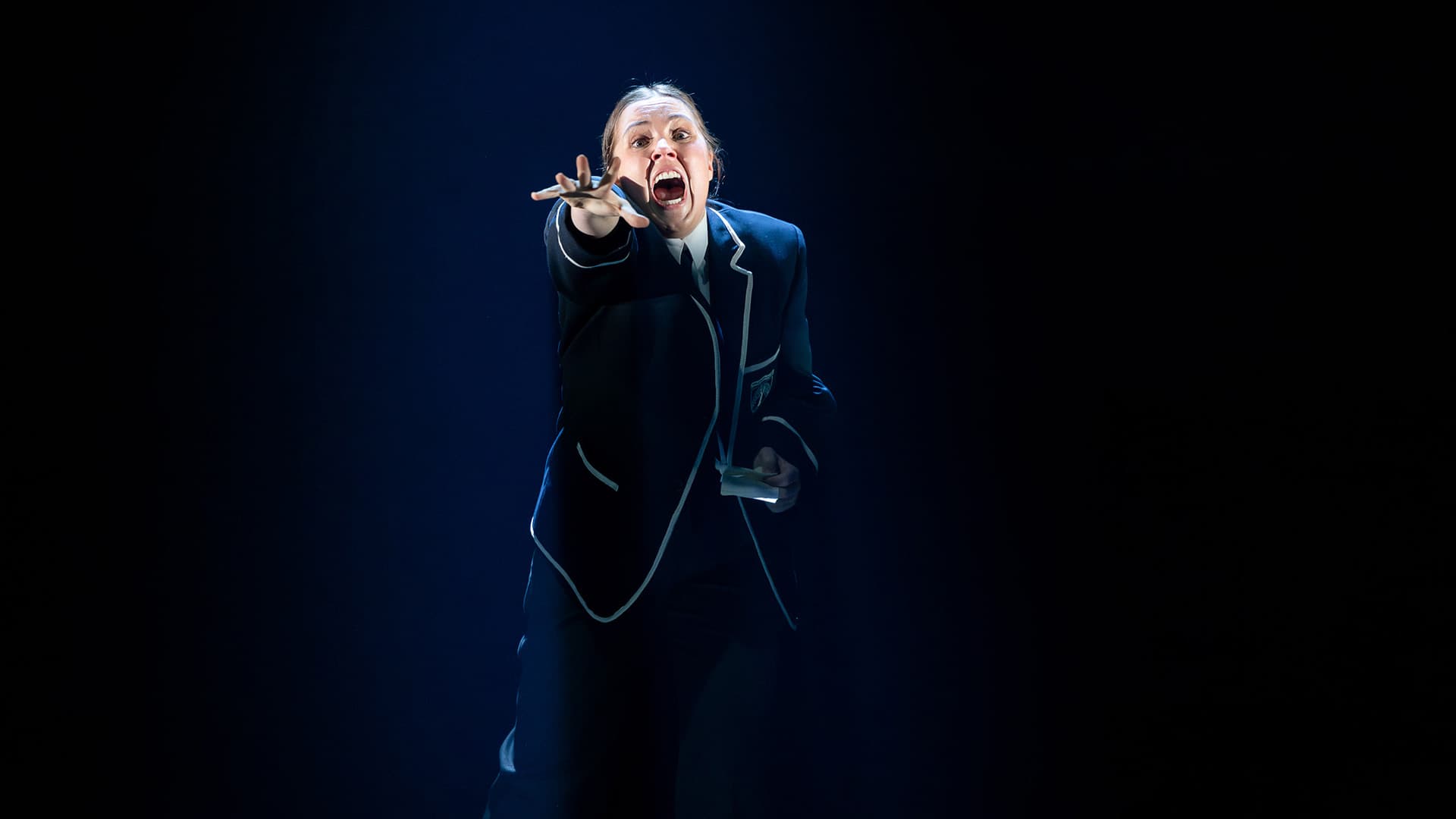
Dressed in contemporary school uniforms, the five wonderful actors that make up the ensemble, Olivia DeJonge, Kirsty Marillier, Lorinda May Merrypor, Masego Pitso, Contessa Treffone play every role, including the teachers, headmistress, policemen and young men.
The ensemble’s work in this opening section is exciting and compelling. They dramatically express the tension between the girls’ repressive upbringing, their romantic desire to be free spirits (fired up by St Valentine’s Day) and confronting the overwhelming, mysterious and spiritual force of nature that is the monumental Hanging Rock and the Australian bush.
Their narration builds with mounting horror as they recount how watches had stopped and time appeared to stand still. A miasma seemed to descend upon the picnicing girls who, as if in a trance, continued to climb the rock, an ancient sacred site of the Woi Wurrung, Dja Dja Wurrung and Taungurung First Nations people.
This first narrated section lasts for about 20 minutes and, for me, is the most powerful part of the production. Tom Wright deftly handles the exposition, establishing the setting and characters and moving quickly to the picnic’s powerful drama and the horror of the disappearance.
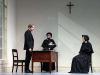
After this, the writing style switches to more conventional play making, and deals with the investigation and the aftershocks of the disappearances. Back at the school the girls have been deeply affected by the tragedy and a mounting hysteria starts to form. Far from being concerned about what has happened to the disappeared girls or about the wellbeing of the students remaining in her care, the headmistress of the college is more concerned with the school’s reputation. Astutely played by Olivia DeJonge (still in school uniform), Mrs Appleyard is a cruel and unqualified woman, concerned mainly with appearances. She personifies the colonial mindset of the period, wanting to bully, control and discipline the most vulnerable of her boarders, Sara (Masego Pitso).
As a counterpoint to Mrs Appleyard, a recently arrived, well-to-do young Englishman, Michael (Contessa Treffone), embraces his new country with a unique openness. Returning to Hanging Rock to search again for the girls, he is also overwhelmed by a dream state and has an experience he can’t remember. Inspired by his experience, he wants to learn about the country. The young women his family introduces him to are not interesting for Michael because of their “Englishness”.
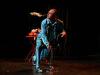
Some of the scenes in this section, particularly the monologues, lack the tightness of writing on show in the first scene. But that doesn’t detract from the work as a whole, which, under Ian Michael’s striking direction, is rich in atmosphere. He has directed his actors to bring a huge physicality to their performances, creating a sense of horror through jarring movements, while simultaneously creating a genuine poignancy.
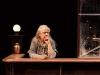
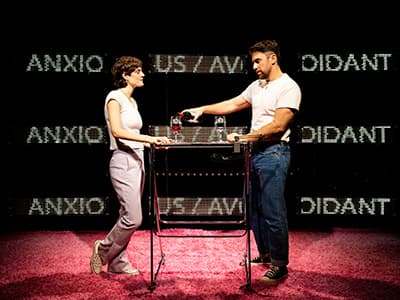
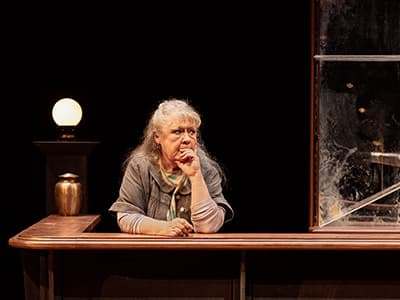
Elizabeth Gadsby’s minimal set, strewn with autumn leaves, and occasionally dressed with props to set the scene – table, a chair, a potted hydrangea, a trampoline – allows the acting strength of the ensemble to shine.
Similarly, lighting designer, Trent Suidgeest squarely keeps the focus on the performers when they are narrating. He sets a moody tone with low, hazy and ethereal lighting for most of the rest of the stage.
As the drama intensified and hysteria washed over the remaining boarders, so did James Brown’s sound design. It started to feel unnecessarily intrusive in its desire to amplify the mounting tension on stage.
The novel had seeped into the Australian literary psyche, becoming one of our foundational colonial myths, long before Peter Weir made his iconic film version, many believing it to be a true story. It is a great story, and with Tom Wright’s fresh, theatrical take, it is well worth adapting for the stage.
Event details
Sydney Theatre Company presents
Picnic at Hanging Rock
by Tom Wright | adapted from the novel by Joan Lindsay
Director Ian Michael
Venue: Drama Theatre | Sydney Opera House NSW
Dates: 17 Feb – 5 Apr 2025
Bookings: www.sydneytheatre.com.au